
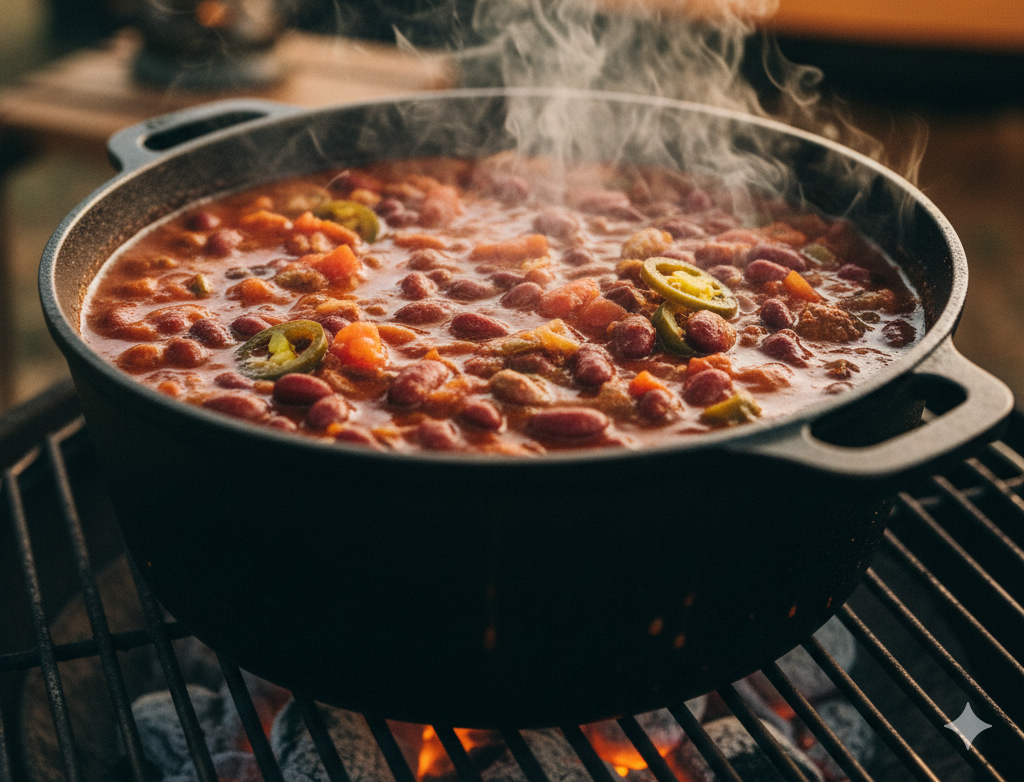
Trailside cooking
Setting up a trailside chuckwagon-style outdoor kitchen combines historical charm with modern functionality. Whether you're building an authentic horse-drawn replica or a modern vehicle-based setup, the goal is a self-contained, mobile cooking station.
1. The Core: The Chuck Box
The heart of any trailside kitchen is the chuck box (or "grub box"). This serves as your pantry, utensil drawer, and workspace.
- Design: Traditionally made of wood, a chuck box features a front flap that folds down into a sturdy prep surface and a lid that can act as a windbreak for your stove.
- Organization: Include specific compartments for spices, dry goods, and tools like vegetable peelers, knives, and cast iron pans.
-
Materials: For authenticity, use solid wood like barn wood and avoid plywood; ensure all wood is sealed to prevent moisture damage. Modern DIY versions often use 1/2" plywood for its weight-to-strength ratio.
2. Essential Equipment
To successfully cook trailside, you need reliable gear that can handle open-air conditions:
- Heat Source: A propane camp stove or a traditional firebox for charcoal and wood cooking.
- Cookware: Heavy-duty aluminum foil for foil packets and Dutch ovens are staples of the "cowboy cooking" style.
- Water & Sanitation: Keep a large water jug for hand washing and a full-size trash can nearby to manage waste.
-
Prep Surface: If your chuck box flap isn't enough, folding tables can provide extra room for a griddle or prep work.

3. Site Setup & Protection
- Shelter: Use a shade canopy to protect your cooking area from sun and rain. This is critical for both the cook's comfort and the longevity of your equipment.
- Ground Cover: RV mats or heavy-duty tarps reduce dust and make cleanup easier, especially in dirt-heavy boondocking sites.
-
Stability: If your kitchen is mobile (like a trailer-based system), use adjustable legs or stabilizers to ensure a level cooking surface on uneven ground.
4. Safety Considerations
- Wildlife: In bear country, never leave food, waste, or scented cooking equipment outside overnight.
-
Environment: Position your setup considering wind direction to keep smoke away from eating areas.


Leave a comment
This site is protected by hCaptcha and the hCaptcha Privacy Policy and Terms of Service apply.